Welcome to Kovolution! 🌿☕
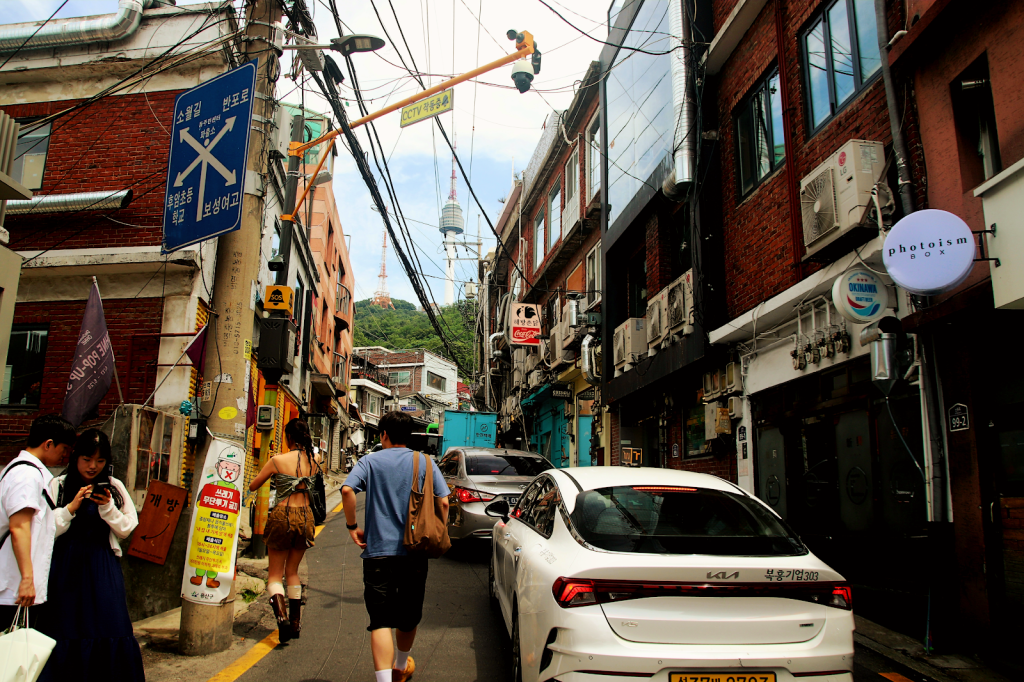
If you look closely at the sprawling cityscape of Seoul, you will notice an interesting pattern. Right next to hyper-modern glass skyscrapers and high-speed transit lines, there are historic, winding neighborhoods where time seems to slow down completely. There is one specific neighborhood nestled snugly at the base of Namsan Mountain that perfectly captures this beautiful, ironic blend of old Seoul heritage and cutting-edge youth culture: Haebangchon (해방촌).

Once considered a quiet, steep residential enclave, Haebangchon—and specifically its beating heart, Sinheung Market (신흥시장)—has completely transformed into one of the most vibrant, popular cultural hubs for young Koreans. It is a unique place where vintage, timeworn brick structures stand side-by-side with highly sophisticated modern restaurants, art boutiques, and indie cafes. Today, we are bringing you a deep, multi-chapter guide to understanding the history, the cultural transformation, the breathtaking Namsan views, and the special meaning this historic neighborhood holds for the youth of South Korea!

Chapter 1. The Roots of Liberation: The Historic Genesis of Haebangchon
To truly appreciate the unique, vintage layout of Haebangchon, we have to travel back to the mid-20th century to look at its historic birth. The name “Haebangchon” translates literally to “Liberated Village,” a name that encapsulates the dramatic ups and downs of modern Korean history. The community was originally formed immediately following Korea’s independence from Japanese colonial rule in 1945. Millions of Koreans who had been displaced abroad or returned from overseas rushed back to the capital, and many chose to pitch temporary shelters on the empty, steep foothills beneath Namsan Mountain.
The population exploded even further following the absolute devastation of the Korean War (1950–1953). Thousands of war refugees fleeing from the northern half of the peninsula crossed the border and settled in this exact village, creating a massive, tightly packed shantytown. Because of the incredibly steep geographical slopes and narrow pathways, the village was historically isolated from the rapid, highly coordinated urban development sweeping the rest of Seoul, leading many to associate the area with postwar poverty and survival. However, this physical isolation inadvertently protected the neighborhood’s original architectural textures, narrow alley layouts, and vintage brick facades, saving them from being demolished by corporate high-rise projects.

Chapter 2. The Heartbeat of the Valley: The Rise and Fall of Sinheung Market
As the residential community of Haebangchon grew during the post-war industrial boom, the residents needed a centralized commercial space to trade daily goods. This led to the official establishment of Sinheung Market (신흥시장) in 1953. For decades, this covered marketplace served as the absolute economic heartbeat of the village.

During the rapid economic growth of the 1970s and 80s, Sinheung Market became a highly industrious hub for the local knitwear and garment manufacturing industry. The narrow alleys echoed with the constant hum of sewing machines, and local families gathered daily to purchase fresh agricultural produce, household essentials, and textiles.

However, as the Korean garment industry shifted toward massive automated factories and large-scale wholesale malls in Dongdaemun during the late 1990s, the small-scale workshops in Sinheung Market slowly closed their doors. The young generation moved away to modern apartments, and the market entered a long period of quiet stagnation, leaving behind empty storefronts, rusted metal roofs, and a nostalgic, frozen-in-time analog atmosphere.

Chapter 3. The Newtro Revolution: How Sinheung Market Reclaimed the Spotlight
The miraculous rebirth of Sinheung Market is a phenomenal case study in urban regeneration and cultural preservation. Instead of tearing down the old market to build a modern commercial mall, visionary local artists, young entrepreneurs, and independent creators looked at the empty, weathered spaces and saw an incredible creative canvas. This sparked what Koreans call the “Newtro” (뉴트로) phenomenon—a stylish combination of the words “New” and “Retro”.


Young designers began moving into the abandoned knitwear workshops, preserving the original exposed concrete walls, vintage wooden rafters, and rusted metal frames while installing sleek glass storefronts, neon lights, and minimalist interior accents. Today, as you navigate the narrow labyrinth of the market, you will discover an eclectic mix of analog comic book arcades, independent zine bookstores, tarot card readers, and highly sophisticated modern pasta bars and wine lounges.

This striking contrast creates a dramatic, cinematic visual effect that makes the market look like a beautifully stylized movie set. This unique aesthetic has made it a favorite filming location for popular K-dramas, viral variety shows, and international music videos, successfully transforming a historic market into an elite global hotspot.

Chapter 4. The Namsan Tower View: A Sky-High Cafe Culture
Beyond the interior alleys of Sinheung Market, one of the absolute greatest tourist draws of Haebangchon is its geographic elevation. Because the neighborhood clings tightly to the ridges of Namsan Mountain, walking up its steep, winding streets brings you to some of the highest panoramic viewing points in downtown Seoul.
Young local entrepreneurs have capitalized beautifully on this unique geography by designing a magnificent array of rooftop cafes and terrace bars. Establishments like Orang Orang, Oeat, and The Royal Food and Drink feature multi-story historic layouts topped with gorgeous, open-air rooftop decks.
Sitting out on these high-altitude patios allows you to enjoy a flawless, direct panoramic view of the majestic N Seoul Tower looming so close it feels as though you could reach out and touch it. During the daytime, these sunlit terraces provide a peaceful, relaxing escape from the city rush. But as twilight falls, the area becomes deeply romantic—the lights of Namsan Tower flare to life in vivid greens and blues, and the twinkling amber lights of the sprawling city below complete a truly breathtaking visual backdrop that pairs magnificently with a hot cup of specialty coffee.

Chapter 5. The Living Sanctuary: What Haebangchon Means to Young Koreans
For the modern youth of South Korea—particularly Millennials and Gen Z—Haebangchon holds a deeply significant, therapeutic meaning that goes far beyond a trendy place to take photos. Living in a highly competitive, hyper-digitized society where architecture is dominated by uniform concrete high-rises and commercial retail chains, young Koreans look to Haebangchon as a living sanctuary of raw, human authenticity.
The neighborhood represents a space where individual creative freedom can thrive outside the rules of major corporate structures. It is a place where young people deliberately slow down their pace, explore hidden alleys, and engage with indie culture.
Furthermore, because of its close geographic proximity to the international district of Itaewon, Haebangchon boasts a uniquely welcoming, global community atmosphere where diverse cultures, international food styles, and old Korean traditions blend together seamlessly. It serves as a beautiful, highly comforting reminder that a neighborhood can proudly honor its post-war historical scars and vintage identity while reinventing itself as a cutting-edge hub of global contemporary lifestyle.
📌 Editor’s Note: The Ultimate Horizon Between Past and Future
If you are putting together your travel itinerary for Seoul, spending an evening exploring Haebangchon and Sinheung Market is a highly recommended experience. Masterfully balancing its historical roots as a postwar refugee sanctuary with its modern identity as a leading “Newtro” hotspot, this hill-side neighborhood delivers a beautiful taste of authentic local soul. You can spend a slow afternoon navigating the narrow, neon-lit alleys of the market, step into an analog indie bookstore, and then transition up to a gorgeous rooftop terrace to watch the sunset cast a golden glow directly over Namsan Tower. It is a spectacular, visually rich destination that perfectly demonstrates the resilient spirit and creative heartbeat of Seoul.



Leave a comment